


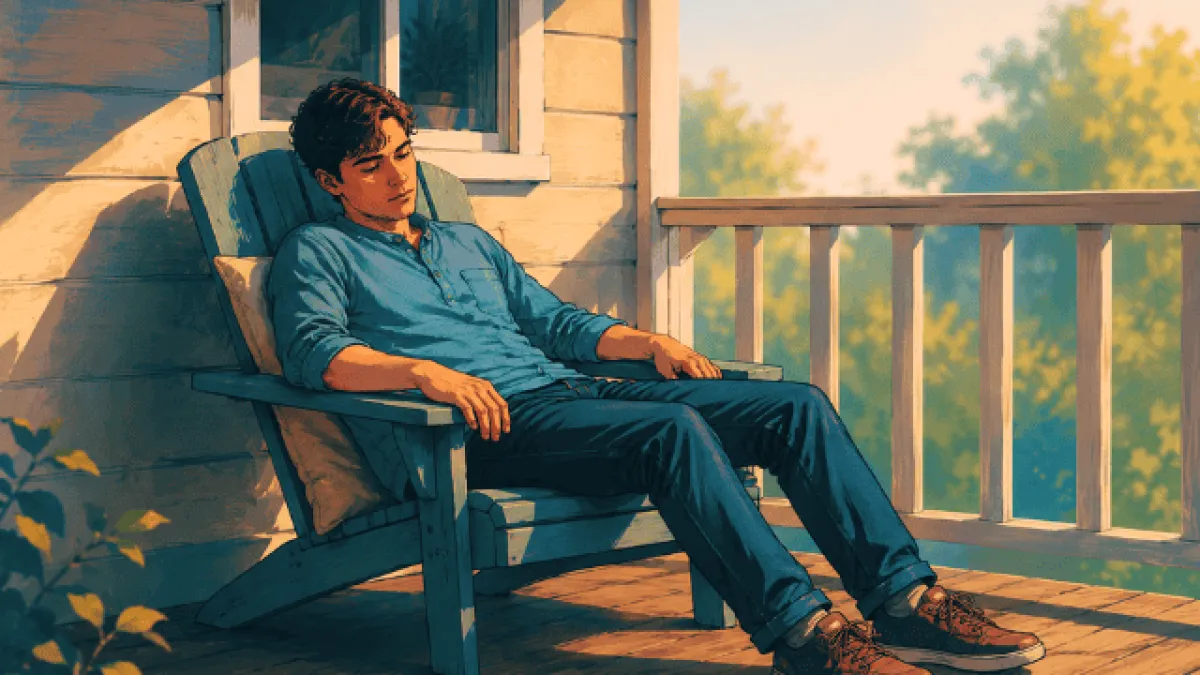
A man reflects on a pattern of behavior he once considered laziness, now understanding it as a response shaped by an unpredictable childhood. He recalls sitting on the floor watching his son struggle with a Lego project, feeling a sudden recognition of the boy’s frustration. That feeling, he says, was familiar from most of his own life: a desire to do something, combined with an inability to stay steady enough to follow through consistently.
Growing up, his father drank heavily. Tension could be felt before the man even walked through the door. Yet childhood also held good memories: football with friends, watching television with his brother, the smell of morning coffee. He says this mix of ordinary and difficult moments confused him for years. He did not feel like someone who had experienced “real trauma,” associating that word with people who had it worse. Meanwhile, his body was reacting to stress constantly, without his awareness.
As he got older, he started drinking. Later came drugs, chaos, and periods of feeling lost, followed by periods where he appeared fine from the outside. He could function well under intense pressure, sometimes better than others. But everyday routines, such as folding laundry or answering emails, felt exhausting in a way he could not explain. He could stay focused during conflict or urgency, but small, repetitive tasks seemed to drain him.
Having children changed his perspective. He began to see himself more clearly. He would react too fast, become emotionally overwhelmed, or completely lose motivation and disappear into his own head. For years, he thought the answer was discipline, or a lack of it. Eventually, he started reading about stress, dopamine, motivation, and the nervous system. He says he was desperate to understand why life felt harder for him than for others.
He learned that the brain adapts to its environment, especially during childhood. If stress, unpredictability, and chaos are repeated, the nervous system organizes itself around that. He believes many adults call themselves lazy when they are actually experiencing a nervous system that learned survival before it learned safety. Survival patterns do not disappear just because life becomes more stable later on. They can follow into relationships, parenthood, work, and rest.
What changed for him was not becoming a perfectly healed person. It was learning to stop turning every struggle into a character flaw. He began asking himself: What is this reaction? Why does my body go there so quickly? What did my nervous system learn years ago that it still thinks I need today? That shift changed how he parents his children. He says children learn from constant experience, not just from what they are told, but from what life around them feels like repeatedly.
Patrick Dahlstrom is the founder of Hope for Families, a platform focused on dopamine, motivation, emotional regulation, and early prevention in children and families. He writes about stress, behavior, and how repeated experiences shape the developing brain.
