


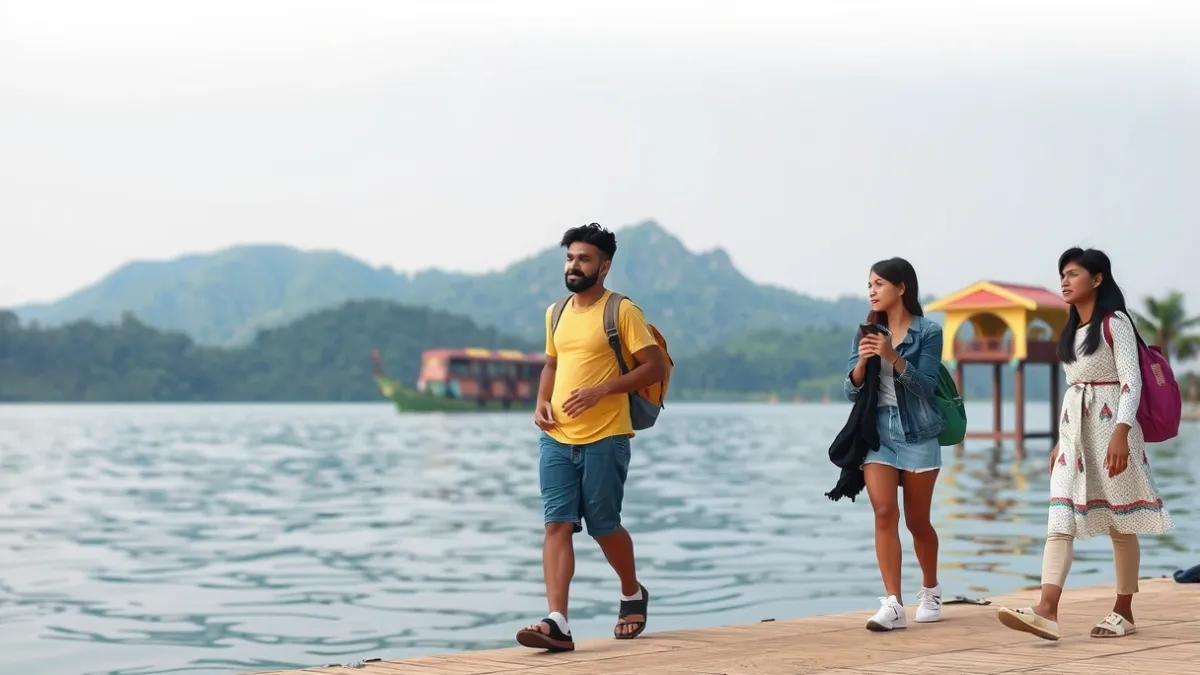
December 2003. A traveler booked an eco-tour of Sri Lanka over the Christmas holiday. The trip was something they had looked forward to for a long time.
On the flight, on Christmas Eve, they started to feel unwell. At first, it seemed like a stomach issue. But the discomfort turned into a deep, persistent pain in the lower back.
By the time the plane landed, something was clearly wrong. A doctor was called to the hotel. The diagnosis was a severe kidney infection. The traveler was given strong pain medication and told to rest.
It was Christmas Day. Not the start they had imagined. They lay in a small bungalow on the beach, trying to get through the pain while other holidaymakers enjoyed themselves outside.
The next morning, a note was slipped under the door. The tour was due to begin that day. Because the traveler was so ill, the hotel manager had agreed they could stay behind to recover. The idea of missing the tour did not sit well. They decided to go, taking the medication with them.
There was no warning. No feeling that the decision carried any weight. They just did not want to miss out.
The group left the hotel and headed inland. The following day, something felt off. News footage on a television showed images of destruction, water, and confusion. Something about a tsunami. The tour guide said it was Thailand. That was partially true.
As the day went on, information started to come through. A couple of people on the tour had mobile phones. They began receiving messages. They were being told they had been listed as “missing.”
The traveler managed to call a friend back in the UK. The friend answered the phone in tears, saying, “Thank God… thank God.” People believed they were dead. The hotel they had stayed in, the one they had left that morning, had been flooded.
The reality was clear. They had been in that place at that time. For reasons that felt completely ordinary, they were not there anymore. There was no dramatic moment. Just a quiet, sobering understanding that things could have been very different.
Once families confirmed everyone was safe, the immediate tension eased. Later, the group asked to be taken to the affected area. It was much closer than expected. The rest of the trip took on a different tone. As a group, they did what they could to help.
When the traveler returned home, the reaction was overwhelming. Messages, calls, and people who had not been spoken to in years had been following the news, trying to find out if everyone was alright. It was an emotional time.
What stayed with the traveler was not just what had happened. It was how many people had cared. They had never really stopped to think about that before. Being placed, even briefly, on the other side of that, brought a different perspective.
Over time, that shift became more noticeable. The traveler began to look at things differently. What mattered. Where their attention went. What felt important and what did not. They found themselves drawn towards helping in ways they had not previously considered.
That eventually led to spending time in Southeast Asia, volunteering and working with communities in Thailand, Cambodia, and Vietnam. At one point, they were invited to stay and work in a Buddhist monastery, helping support blind students.
Looking back, the traveler thinks about how it all began. Not with the tsunami. But with the illness they did not want. The inconvenience they tried to push through. The thing that felt like it was getting in the way. At the time, it was something to work around, something to ignore.
The traveler does not try to explain what happened. They do not feel the need to give it a meaning or attach a conclusion. But they do see it differently now. Not everything that disrupts us is against us. Not everything that feels like a problem actually is one. And not everything important announces itself in a way we immediately recognize.
The trip began in a way they resisted. It unfolded in a way they did not understand. And it left them with something they did not expect. They still think about how close it all was. But more than that, they think about what came after, and how easily they might have missed that too.
